At first glance, “Don’t Tread on Me” and simple patriotic slogans seem like two names for the same thing, but using the wrong one can change your entire context. Whether you are dealing with this for the first time or just trying to get your facts straight, understanding the core difference is essential.
The phrase “Don’t Tread on Me” is more than just words printed on a flag or bumper sticker. It carries deep historical roots, political emotion, and personal symbolism. For some, it represents courage and independence. For others, it signals controversy or strong political identity. That difference in perception matters.
Definition & Core Meaning
At its core, “Don’t Tread on Me” is a warning. It communicates strength, self-defense, and refusal to be oppressed.
Clear Meaning
The phrase means:
- Do not attack or oppress me.
- Respect my rights and boundaries.
- I will defend myself if provoked.
- Freedom is non-negotiable.
It is not automatically aggressive. Instead, it suggests: “I am peaceful, but I am prepared.”
Simple Examples
- “He values independence and lives by a ‘Don’t Tread on Me’ mindset.”
- “The flag represents standing firm against control.”
- “She sees it as a symbol of personal freedom.”
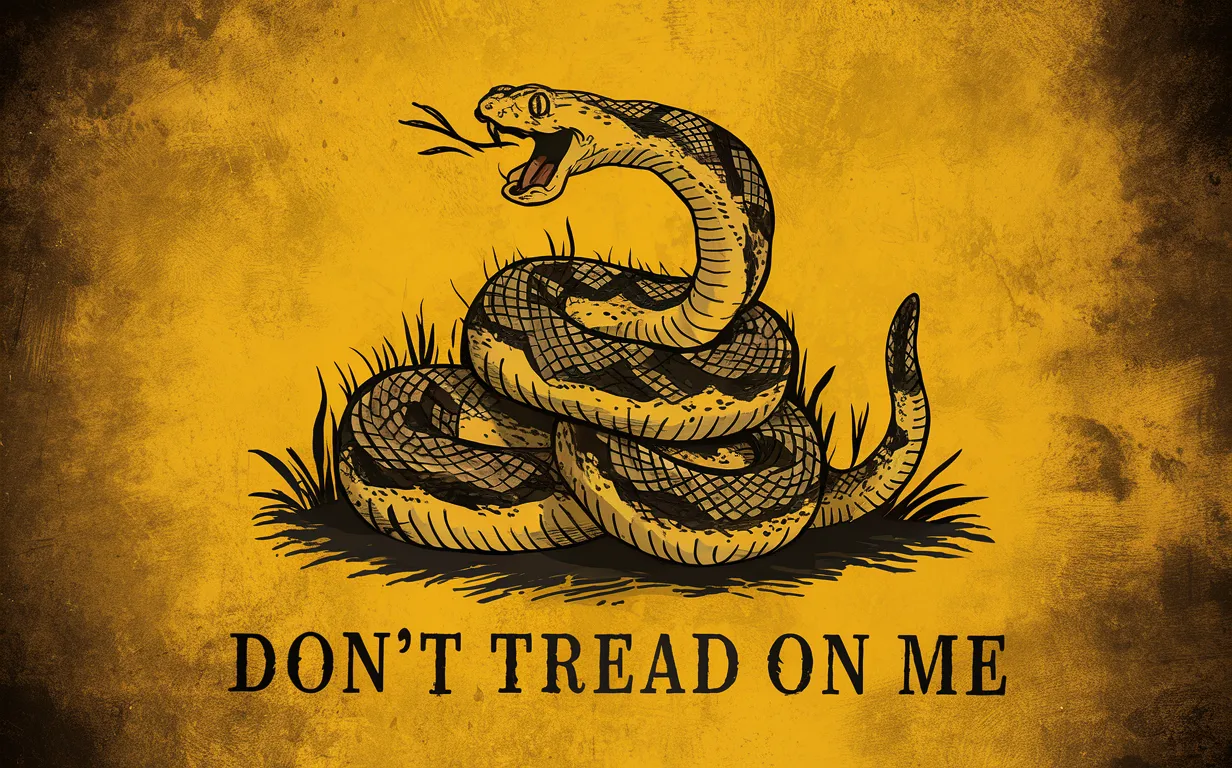
The phrase often appears on the Gadsden Flag, a bright yellow banner featuring a coiled rattlesnake ready to strike.
Legal and Constitutional Connections
“Don’t Tread on Me” is often linked to constitutional principles, especially in the United States. While the phrase itself does not appear in founding legal documents, its spirit closely aligns with ideas found in the United States Constitution and the Bill of Rights.
Many supporters connect the slogan to:
- The Second Amendment (right to bear arms)
- The First Amendment (freedom of speech and religion)
- Protection against unreasonable government intrusion
To them, the phrase acts as a reminder that government power should have limits. It reflects the belief that individual rights come first, and authority should not overstep constitutional boundaries.
However, legal experts often point out that constitutional interpretation varies. The phrase represents a philosophical stance rather than a formal legal doctrine.
Media, Pop Culture, and Commercial Influence
Over time, “Don’t Tread on Me” has moved beyond historical flags into mainstream culture.
You can now find it on:
- T-shirts and hats
- Tactical gear
- Music lyrics
- Movies and documentaries
In some action films and political dramas, the symbol appears to communicate rebellion or strong patriotism without needing dialogue. Its visual impact—the coiled snake and bold text—instantly signals defiance.
Commercial brands have also adopted the design to appeal to audiences who value independence and self-reliance. This commercial use sometimes strips the slogan of its historical depth and turns it into a lifestyle aesthetic.
As a result, the phrase today lives in both serious political discussion and casual pop culture expression.
Generational Perspectives on the Phrase
Different age groups often interpret the slogan in unique ways.
Older Generations
Many older Americans associate it directly with Revolutionary War history and national pride. For them, it reflects heritage and sacrifice.
Generation X and Millennials
These groups may connect it more to political movements of the 2000s and 2010s, especially during debates about taxes, government authority, and civil liberties.
Generation Z
Younger audiences sometimes view it through a social media lens. For some, it represents independence. For others, it carries strong political connotations shaped by recent events.
This generational divide shows how meaning evolves. A phrase born in the 18th century now interacts with 21st-century conversations about freedom and identity.
Symbolism Compared to Other Freedom Slogans
“Don’t Tread on Me” belongs to a broader family of liberty-focused phrases.
It differs from patriotic expressions like “Liberty or Death” because it emphasizes defensive readiness rather than aggressive revolution.
It also contrasts with slogans promoting unity, such as E Pluribus Unum, which focus on collective strength. Instead, “Don’t Tread on Me” centers on personal sovereignty and protection from external force.
Compared to modern protest chants, it is more symbolic than specific. It does not name policies or demands. Instead, it expresses a principle: respect boundaries or face resistance.
This distinction explains why it can fit multiple movements across centuries—it speaks to a general human instinct rather than a single cause.
Ethical Considerations When Displaying the Symbol
Displaying “Don’t Tread on Me” publicly can send powerful messages. Because of its layered history and modern political associations, intention matters.
Before using it, consider:
- Audience: How will others interpret it?
- Context: Is the setting historical, political, or casual?
- Purpose: Are you expressing heritage, protest, or personal independence?
In some environments, the phrase may be seen as a strong declaration of rights. In others, it could trigger debate or misunderstanding.
Thoughtful use helps prevent confusion. Symbols carry emotional weight, and awareness of their impact shows maturity and respect for diverse perspectives.
Understanding that not everyone sees the phrase the same way allows for more informed and meaningful expression.
Historical & Cultural Background
To fully understand the phrase, we need to travel back to 1775 during the American Revolution.
The Revolutionary Origin
The slogan appeared on the Gadsden Flag, designed by Christopher Gadsden. It was presented to the Continental Marines as a symbol of resistance against British rule.
The rattlesnake was chosen intentionally:
- Native to North America
- Silent until threatened
- Deadly when provoked
It symbolized the American colonies: peaceful but unwilling to be dominated.
Ancient Symbolism of the Snake
Across cultures, snakes represent:
- Protection and warning (Indigenous American symbolism)
- Rebirth and power (Ancient Egypt and Asia)
- Danger and wisdom (Western traditions)
The rattlesnake, specifically, carried meaning in early American identity—alert, resilient, and territorial.
Cultural Interpretations
- Western societies: Symbol of liberty and anti-tyranny.
- Indigenous perspectives: Connection to land and natural defense.
- Modern political culture: Expression of limited government values.
The phrase has evolved over centuries, but its core message—resistance against oppression—remains consistent.
Emotional & Psychological Meaning
Beyond history, “Don’t Tread on Me” holds strong emotional energy.
1. Personal Boundaries
Psychologically, it reflects healthy boundaries. It says:
“I respect others, but I expect the same in return.”
2. Identity and Autonomy
People drawn to this phrase often value:
- Independence
- Self-reliance
- Individual responsibility
It can represent someone who refuses to be controlled.
3. Empowerment
For many, the slogan becomes empowering. It can symbolize:
- Standing up against bullying
- Defending rights
- Protecting family or community
However, emotional interpretations differ depending on personal beliefs.
Different Contexts & Use Cases
The meaning shifts depending on where and how it’s used.
Personal Life
Someone might use it to describe their personality:
“I’m easygoing, but don’t push me.”
Social Media
Online, it often signals political identity, especially within libertarian or conservative communities.
See also: What Does Libertarian Mean?
Relationships
In personal relationships, it can imply:
- “Respect my independence.”
- “Don’t cross my boundaries.”
Professional Context
In business settings, it may represent:
- Entrepreneurial independence
- Resistance to excessive regulation
- Strong negotiation stance
Context always determines tone.
Hidden, Sensitive, or Misunderstood Meanings
The phrase can spark controversy.
What People Get Wrong
- It does not automatically mean aggression.
- It does not represent hate by default.
- It originally symbolized defense, not attack.
Cultural Misinterpretations
In modern times, some groups have adopted the symbol in political protests. This has led to mixed reactions.
For some:
- It represents patriotism and constitutional rights.
For others:
- It feels politically charged or exclusionary.
Because of this, wearing or displaying it can communicate more than intended.
Popular Types & Variations (8–10)
Over time, variations have emerged.
1. Classic Gadsden Flag
Yellow background, coiled rattlesnake, original slogan.
2. Black-and-White Version
Modern aesthetic adaptation.
3. “Don’t Tread on Me” License Plates
Used in certain U.S. states to show historical pride.
4. Military-Inspired Versions
Used within armed forces communities.
5. Libertarian Movement Adaptation
Symbol of minimal government intervention.
6. Tea Party Usage
Popular during political movements advocating limited federal power.
7. Snake-Only Graphic
Minimalist version without text.
8. Humorous Parodies
Playful versions like “No Step on Snek.”
9. Feminist Adaptations
Reinterpreted as boundary-setting empowerment.
10. Modern Protest Signs
Used in civil rights and freedom-based protests.
Each variation keeps the central theme: resistance to control.
How to Respond When Someone Asks About It
If someone asks what it means, your response can vary.
Casual Response
“It basically means don’t mess with my rights.”
Meaningful Response
“It’s a historic symbol of standing against oppression and protecting freedom.”
Fun Response
“It’s like saying I’m chill… until I’m not.”
Private Response
“It’s about boundaries and self-respect for me.”
Your tone depends on your audience.
Regional & Cultural Differences
The phrase resonates differently worldwide.
Western Perspective
Primarily linked to American Revolutionary history and constitutional rights.
Asian Perspective
Often viewed as an example of Western individualism.
Middle Eastern Perspective
May be interpreted as political protest symbolism rather than historical heritage.
African & Latin American Perspective
Seen as a broader resistance symbol, similar to anti-colonial messages.
Meaning shifts depending on cultural lens.
FAQs
1. Is “Don’t Tread on Me” political?
It began as a Revolutionary War symbol. Today, it is often associated with political movements, but its original meaning was about resisting oppression.
2. What does the snake represent?
The rattlesnake represents warning, readiness, and self-defense.
3. Is it aggressive?
Not inherently. It signals defense rather than attack.
4. Why is it controversial?
Modern political usage has created divided opinions.
5. Can it mean personal boundaries?
Yes. Many interpret it as a metaphor for self-respect.
6. Is it still used today?
Yes, on flags, clothing, protests, and personal merchandise.
7. Does it have racist origins?
Historically, no. It originated during the American Revolution. However, modern usage can influence perception.
Conclusion
“Don’t Tread on Me” is a phrase layered with history, symbolism, and emotion. Born during a revolutionary struggle for independence, it began as a warning against oppression and a declaration of readiness to defend freedom. Over time, it has evolved into a powerful cultural marker—sometimes patriotic, sometimes political, sometimes deeply personal.
Discover More Post
Shalom Meaning Explained Truth Depth and Power 2026
What Does 666 Mean? Truths Myths and Secrets 2026
The Truth Behind Snapchat’s Green Dot Explained
