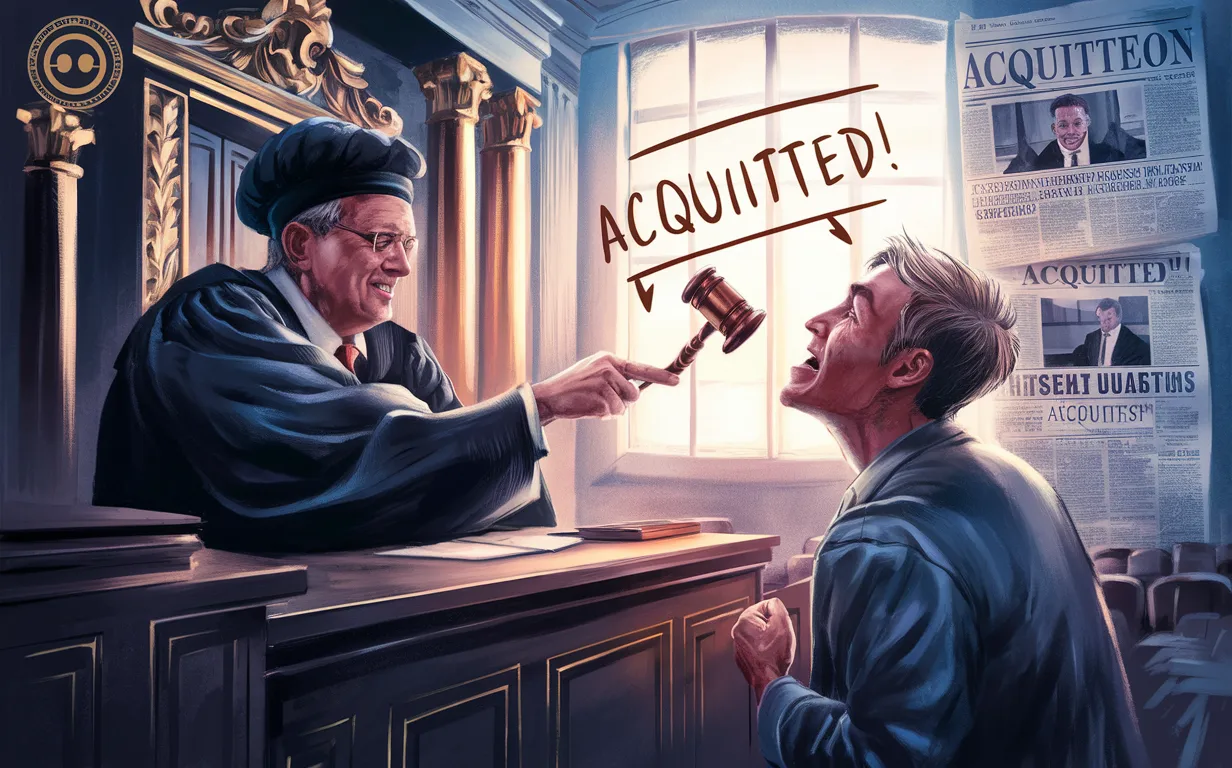
At first glance, acquitted and convicted seem like two names for the same thing, but using the wrong one can change your entire context. Whether you are dealing with this for the first time or just trying to get your facts straight, understanding the core difference is essential.
The word acquitted often appears in crime news, courtroom dramas, legal discussions, and even everyday conversations. Yet many people quietly misunderstand what it truly means. Some assume it means the person is “proven innocent,” while others think it simply means the case was dropped. Both ideas miss important details.
Definition & Core Meaning
Acquitted means that a person accused of a crime has been formally declared not guilty by a court of law.
Core meanings explained simply:
- A judge or jury decides the evidence is not strong enough to prove guilt.
- The accused person is released from legal blame for that charge.
- The case ends without a conviction.
What acquitted does not automatically mean:
- It does not always mean the person is factually innocent.
- It does not mean the crime never happened.
- It does not guarantee public approval or reputation repair.
Simple examples:
- “The defendant was acquitted due to lack of evidence.”
- “After a long trial, she was acquitted on all charges.”
- “He felt relieved but emotionally drained after being acquitted.”
Historical & Cultural Background
Ancient roots
The concept of acquittal dates back to ancient legal systems, including Roman and Greek courts. Roman law emphasized absolutio, meaning release from accusation. The idea was simple: without sufficient proof, punishment was unjust.
Medieval and early modern courts
In medieval Europe, acquittal was rare due to heavy reliance on confessions and religious tests. Over time, evidence-based judgments became more central, giving acquittal its modern legal weight.
Cultural interpretations
- Western cultures: Acquittal is tied closely to fairness, due process, and the presumption of innocence.
- Asian societies: While legal acquittal exists, social perception often carries more weight than court outcomes.
- Indigenous justice systems: Focused more on restoration than verdicts, acquittal may matter less than reconciliation.
These layers add depth to why acquittal can feel legally final yet socially unresolved.
Legal Standard Behind an Acquittal
An acquittal happens when the prosecution fails to meet the legal standard of proof. In criminal cases, this standard is “beyond a reasonable doubt.” Even if suspicion exists, the court must acquit if the evidence does not meet this high threshold. This rule exists to protect individuals from wrongful punishment and ensures fairness in justice.
Difference Between Acquitted and Charges Dropped
Being acquitted means the case went to trial and ended with a not-guilty verdict. Charges dropped means the case ended before trial, often due to weak evidence, procedural errors, or witness issues. Both clear the accused legally, but acquittal carries stronger courtroom finality.
What Happens After Someone Is Acquitted
After acquittal, the accused is legally free from the charges and any related penalties. Bail conditions end, custody orders are lifted, and criminal punishment is barred. However, personal, professional, and social consequences may still exist depending on public exposure.
Does Acquittal Clear a Criminal Record?
In many legal systems, an acquittal does not automatically erase arrest records. The charge may still appear unless expungement or sealing is requested. This distinction is important for employment checks, travel, and background screenings.
Acquitted in Criminal vs Civil Cases
Acquittal applies only to criminal cases. A person may be acquitted criminally yet still face a civil lawsuit for damages. Criminal cases require stronger proof, while civil cases rely on probability, which is why outcomes can differ.
Media Influence on the Meaning of Acquitted
Public opinion is often shaped more by headlines than verdicts. Media framing can imply guilt even after acquittal, leading to long-term reputation damage. This gap between legal truth and public belief is one of the most misunderstood aspects of acquittal.
Why Juries Acquit Even When Evidence Exists
Evidence alone does not guarantee conviction. Jurors must evaluate credibility, legality of evidence, and consistency. If doubt remains—even small doubt—the law requires acquittal. This protects innocent people from being punished due to uncertainty.
Emotional & Psychological Meaning
Being acquitted can be emotionally complex.
Personal impact:
- Relief from legal pressure
- Lingering stress from public scrutiny
- Identity confusion, especially after long trials
For some, acquittal becomes a moment of healing. For others, it opens a new chapter of rebuilding trust and self-worth.
Psychological symbolism:
- Represents a second chance
- Marks an end to uncertainty
- Can trigger growth, resilience, and reflection
In many cases, the emotional journey doesn’t end with the verdict—it begins there.
Different Contexts & Use Cases
Personal life
People use “acquitted” when discussing legal troubles involving friends or family, often with emotional undertones.
Social media
Online discussions frequently misuse the term, confusing acquittal with innocence or dismissal. This fuels misinformation.
Relationships
An acquittal may repair or strain relationships depending on trust and belief systems.
Professional environments
In careers like law, journalism, or education, correct usage is essential for credibility and accuracy.
See also: What Does Convicted Mean
Hidden, Sensitive, or Misunderstood Meanings
Common misconceptions:
- “Acquitted means innocent” — not always true
- “Acquitted means case was fake” — incorrect
- “Acquitted people can’t be judged” — legally yes, socially not guaranteed
Sensitive realities:
- Acquitted individuals may still face stigma
- Victims may feel justice was incomplete
- Media framing can distort public understanding
The meaning of acquitted shifts depending on legal, emotional, and cultural lenses.
How to Respond When Someone Asks About It
Casual responses:
- “It means the court found them not guilty.”
- “They weren’t convicted.”
Meaningful responses:
- “It means there wasn’t enough proof to legally blame them.”
- “The law cleared them, though emotions can still be complex.”
Fun responses:
- “Court said, ‘Not proven—case closed.’”
Private responses:
- “It’s a legal release, not always a personal one.”
Choosing the right response depends on sensitivity and context.
Regional & Cultural Differences
Western regions
Acquittal is strongly respected as a legal conclusion, though media narratives still influence opinion.
Asian regions
Social reputation often outweighs legal outcomes, making acquittal less socially final.
Middle Eastern contexts
Acquittal may restore legal standing but not always honor, depending on cultural norms.
African & Latin cultures
Community perception and reconciliation often matter more than courtroom decisions.
These differences shape how acquittal is felt, not just understood.
FAQs
1. What does acquitted mean in simple terms?
It means the court decided the person is not guilty of the charges.
2. Is acquitted the same as innocent?
No. It means guilt was not proven, not always that innocence was proven.
3. Can an acquitted person be tried again?
Usually no, unless special legal exceptions apply.
4. Does acquitted mean the case is over?
Yes, for that specific criminal charge.
5. Can someone be acquitted and still face consequences?
Yes, socially or through civil cases.
6. Is acquitted better than charges dismissed?
They are different; acquittal comes after a trial, dismissal may not.
Conclusion
To be acquitted means the court has decided that guilt was not proven under the law. It ends the legal case, protects the individual from punishment, and reinforces the principle of fairness in justice. While public opinion may vary carries clear legal authority and finality.
Discover More Post
92+ Wife-to-Be Quotes to Express Your Love 2026
119+ Heartfelt Short Thinking of You Messages (2026 Guide)
147+ Thoughtful Thank You Messages for Trainer (2026 …
