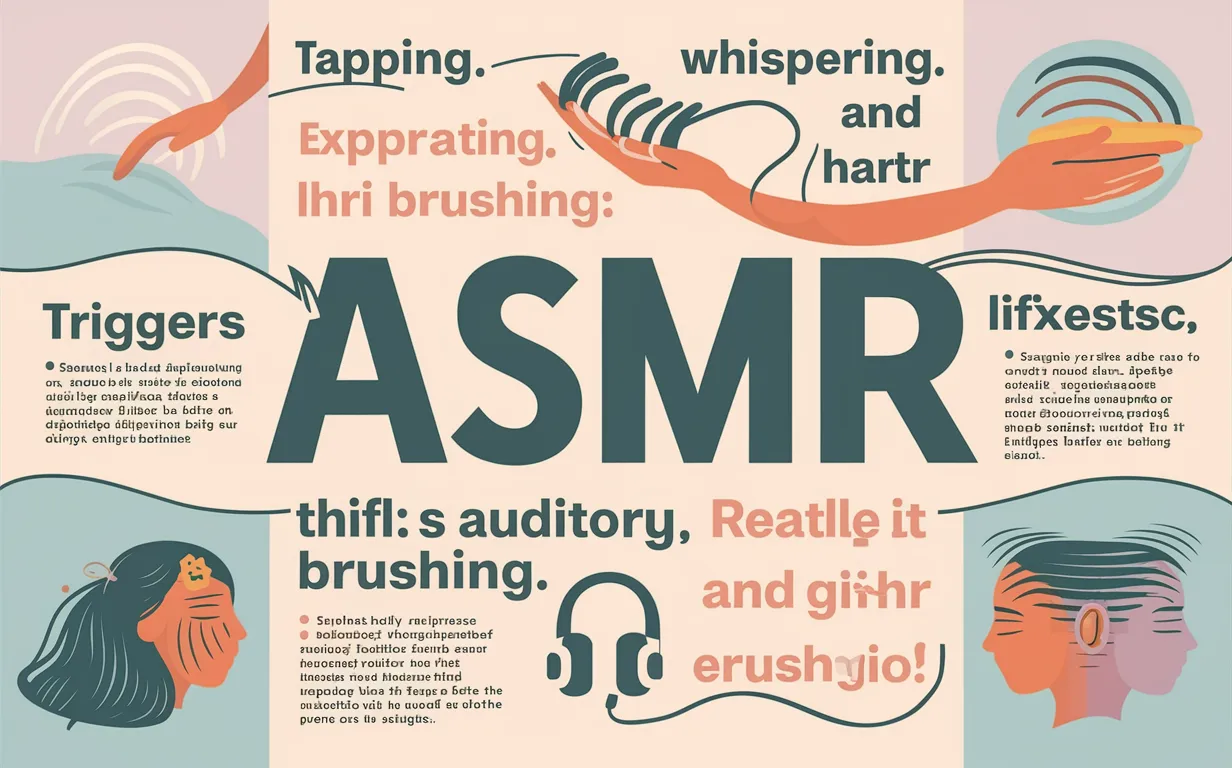
At first glance, ASMR and relaxation videos seem like two names for the same thing, but using the wrong one can change your entire context. Whether you are dealing with this for the first time or just trying to get your facts straight, understanding the core difference is essential.
Many people assume ASMR is simply about soft whispers or calming background sounds. Others believe it is a trend created by social media. In reality, ASMR describes a very specific physical and emotional experience
Definition & Core Meaning of ASMR
ASMR stands for Autonomous Sensory Meridian Response.
Here is what each word means in simple terms:
- Autonomous – Happens automatically, without you trying.
- Sensory – Related to your senses (hearing, sight, touch).
- Meridian – A peak or high point.
- Response – A reaction to something.
Put together, ASMR describes a spontaneous sensory reaction that creates a tingling feeling and deep calm.
Core Meaning in Simple Words
ASMR is:
- A physical tingling sensation.
- Triggered by specific sounds or visuals.
- Often associated with relaxation and comfort.
- Different from normal excitement or chills from music.
Simple Examples
- “I felt ASMR when she whispered into the microphone.”
- “The sound of pages turning gave me tingles.”
- “Watching someone carefully paint made my scalp tingle.”
Not everyone experiences ASMR the same way. Some feel intense tingles. Others simply feel relaxed and sleepy.
See also: What Does Overstimulated Mean?
Historical & Cultural Background
Although the term “ASMR” became popular in the 2010s, the experience itself is not new.
Ancient Experiences
Long before the internet, people described similar sensations during:
- Spiritual rituals
- Storytelling by elders
- Hair brushing or grooming
- Close personal attention
In many traditional cultures, gentle repetitive sounds were used to calm the nervous system. Whispered prayers, rhythmic chanting, and soft hand movements were common in spiritual practices across Asia, Africa, and Indigenous communities.
Modern Naming of ASMR
The term “Autonomous Sensory Meridian Response” was coined in 2010 by online communities looking for a scientific-sounding description. The name helped separate it from inappropriate assumptions and allowed people to discuss it openly.
Cultural Interpretations
- Western cultures often link ASMR with relaxation, sleep aids, and online video creators.
- Asian cultures, particularly in Japan and South Korea, incorporate ASMR into media, beauty content, and audio storytelling.
- Indigenous traditions have long used soft rhythmic sounds for grounding and connection.
While the name is modern, the sensation is deeply human and timeless.
Emotional & Psychological Meaning
ASMR is not just about tingles. It connects to how humans experience comfort and safety.
1. Nervous System Regulation
ASMR can activate the parasympathetic nervous system — the part responsible for calm and rest. Many people use it to:
- Reduce stress
- Improve sleep
- Ease anxiety
- Lower heart rate
2. Feeling of Personal Attention
Many ASMR triggers involve close attention, such as:
- Someone speaking softly to you
- Eye contact through a camera
- Gentle tapping or slow hand movements
This mirrors childhood experiences like being read to or cared for. The brain associates it with safety.
3. Identity & Self-Understanding
Some people feel relieved when they discover ASMR has a name. They realize:
- They are not strange.
- Others share the same sensation.
- Their body responds uniquely to certain stimuli.
Understanding ASMR can strengthen personal awareness and emotional intelligence.
Different Contexts & Use Cases
ASMR shows up in many parts of modern life.
Personal Life
People use ASMR videos to:
- Fall asleep faster
- Calm racing thoughts
- Focus while studying
- Unwind after work
Social Media
Platforms like video-sharing apps have made ASMR mainstream. Creators specialize in:
- Whispering
- Tapping
- Role-play
- Food sounds
It has grown into a global content category.
Relationships
ASMR can strengthen intimacy in subtle ways. Soft tones and slow movements create emotional closeness. However, it is not inherently romantic or sexual, despite common misunderstandings.
Professional & Modern Usage
ASMR techniques are now used in:
- Marketing advertisements
- Beauty tutorials
- Meditation apps
- Audio storytelling
Brands use gentle sound design to create emotional engagement.
Hidden, Sensitive, or Misunderstood Meanings
ASMR is often misunderstood.
1. It Is Not Automatically Sexual
One of the biggest misconceptions is that ASMR is inappropriate. While some creators may blur boundaries, the core sensation is neurological, not sexual.
2. Not Everyone Feels It
Some people never experience tingles. That does not mean they are doing it wrong. ASMR varies from person to person.
3. It Is Not Hypnosis
ASMR may feel trance-like, but it is not mind control. You remain fully aware.
4. It Is Not Just “Weird Sounds”
The triggers are intentional and carefully designed to stimulate sensory pathways gently.
Understanding these nuances prevents mislabeling and cultural confusion.
Popular Types of ASMR
Here are common ASMR categories with short explanations:
1. Whispering ASMR
Soft spoken words close to a microphone to trigger tingles.
2. Tapping ASMR
Rhythmic tapping on surfaces like wood, glass, or plastic.
3. Role-Play ASMR
Simulated scenarios such as a haircut, doctor visit, or makeup session.
4. Eating Sounds (Mukbang ASMR)
Amplified chewing or crunching sounds.
5. Page Turning ASMR
Slow flipping of book pages for gentle audio stimulation.
6. Personal Attention ASMR
Direct eye contact and focused conversation style.
7. Brushing Sounds
Hair brushing or microphone brushing for soft texture sounds.
8. Nature ASMR
Rain, wind, ocean waves, or forest ambience.
9. No Talking ASMR
Only environmental or object sounds, no speech.
10. Visual Triggers
Slow hand movements, light tracing, or careful crafting.
Each type appeals to different sensory preferences.
How to Respond When Someone Asks About ASMR
When someone asks, “What does ASMR mean?” your response can vary depending on tone.
Casual Response
“It’s that relaxing tingle feeling you get from soft sounds.”
Meaningful Response
“It’s a sensory reaction where certain sounds or visuals create a calming, tingling sensation.”
Fun Response
“It’s brain tingles from whispers and tapping!”
Private Response
“It’s something that helps me relax and sleep better.”
You do not owe anyone a detailed explanation. Keep it comfortable.
Regional & Cultural Differences
ASMR is experienced worldwide, but its expression varies.
Western Regions
Often associated with online creators and sleep content. Many use high-quality microphones and immersive sound technology.
Asian Regions
In countries like Japan and South Korea, ASMR content is integrated into beauty culture, food experiences, and anime-style role-play.
Middle Eastern Regions
Soft recitations and rhythmic speech patterns share similarities with ASMR triggers, especially in spiritual settings.
African & Latin Cultures
Oral storytelling traditions and rhythmic sound rituals reflect similar calming sensory effects, even if not labeled as ASMR.
The experience transcends language and geography.
Frequently Asked Questions
1. What does ASMR stand for?
ASMR stands for Autonomous Sensory Meridian Response, a tingling sensory reaction triggered by specific sounds or visuals.
2. Is ASMR real or psychological?
It is a real sensory experience. Research suggests it involves neurological relaxation responses.
3. Why do whispers trigger ASMR?
Whispers mimic close personal attention, which activates comfort-related brain pathways.
4. Is ASMR safe?
Yes, it is generally safe. It is simply a sensory response to gentle stimuli.
5. Can everyone experience ASMR?
No. Some people feel intense tingles, others feel mild relaxation, and some feel nothing.
6. Is ASMR linked to anxiety relief?
Many people use it to manage stress and sleep better, though it is not a medical treatment.
7. When did ASMR become popular?
It gained mainstream popularity in the early 2010s through online communities and video platforms.
Conclusion
ASMR is far more than whispering videos or internet trends. It is a natural sensory response that connects deeply to how humans experience comfort, safety, and calm. For some, it creates gentle tingles that travel down the spine. For others, it simply brings peace in a noisy world.
Discover More Post
20+ Good Night Messages to My Soulmate 🌙💖
50+ Best Valentine Messages for Friends ❤️
💖 50+ I Promise to Love You Forever Quotes Heartfelt & Funny …
