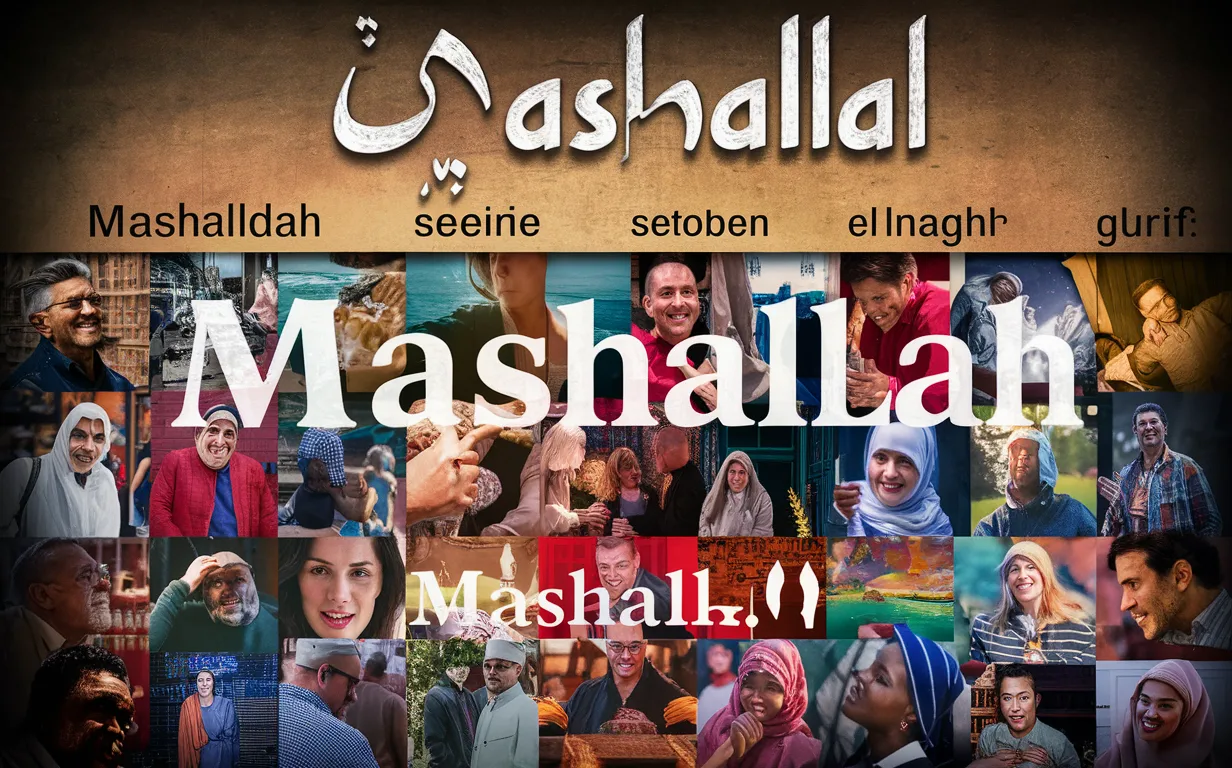
At first glance, Mashallah and Inshallah seem like two names for the same thing, but using the wrong one can change your entire context. Whether you are dealing with this for the first time or just trying to get your facts straight, understanding the core difference is essential.
Many people hear the word Mashallah in conversations, social media captions, weddings, or even when someone admires a newborn baby. Some assume it simply means “wow” or “how beautiful.” Others believe it is a phrase only Muslims use during religious occasions. The truth is deeper and more meaningful than that.
Definition & Core Meaning of Mashallah
The word Mashallah literally translates to:
“What Allah has willed”
or
“As God has willed”
It comes from three Arabic components:
- Ma – what
- Sha’a – has willed
- Allah – God
Core Meanings Explained
- Acknowledgment of God’s will
When something good happens, Mashallah recognizes that it occurred by divine permission. - Expression of admiration
It is often said when praising beauty, success, or blessings. - Protection from envy (evil eye)
In many cultures, it is used to prevent jealousy or negative energy. - Gratitude without arrogance
It keeps appreciation humble and spiritually grounded.
Simple Examples
- “Your daughter is so talented, Mashallah.”
- “Mashallah, your new home is beautiful.”
- “You scored highest in the class? Mashallah!”
In each case, the phrase adds respect and spiritual awareness to the compliment.
See also: What Does Inshallah Mean?
Historical & Cultural Background
Mashallah originates from classical Arabic and appears in the Qur’an, particularly in Surah Al-Kahf (18:39), where believers are encouraged to acknowledge blessings by saying similar phrases.
Historically, the phrase spread alongside Islamic civilization across:
- The Middle East
- North Africa
- South Asia
- Parts of Europe under Islamic influence
Over centuries, Mashallah became deeply embedded in daily speech, not only in religious settings but also in family life, markets, celebrations, and poetry.
Cultural Interpretations
- Middle Eastern cultures use Mashallah frequently in everyday admiration.
- South Asian communities (Pakistan, India, Bangladesh) commonly say it at weddings and births.
- Turkish culture often writes it on baby clothes or car stickers for protection.
- In some Mediterranean regions, similar protective phrases exist against envy.
Though rooted in Islamic tradition, Mashallah has crossed religious boundaries in some regions and is used culturally rather than strictly religiously.
Emotional & Psychological Meaning
Beyond translation, Mashallah carries psychological depth.
1. Promotes Humility
When someone says Mashallah, they acknowledge that success is not purely personal effort. This prevents pride from turning into arrogance.
2. Encourages Gratitude
The phrase shifts focus from material achievement to spiritual gratitude.
3. Protects Emotional Boundaries
In cultures that strongly believe in the evil eye, Mashallah acts as emotional reassurance. It reduces anxiety about envy or jealousy.
4. Strengthens Identity
For many Muslims, using Mashallah connects them to their faith and community. It reinforces belonging and spiritual mindfulness.
The phrase becomes more than words—it becomes a mindset.
Different Contexts & Use Cases
Mashallah appears in various everyday situations.
Personal Life
- Complimenting children
- Admiring someone’s home
- Celebrating achievements
- Appreciating beauty
Social Media
You’ll often see captions like:
- “Graduated today, Mashallah!”
- “Family dinner vibes, Mashallah.”
It adds cultural warmth to posts.
Relationships
Parents say it to children. Friends say it to each other. Elders use it as a blessing.
Professional & Modern Usage
Even in business settings in Muslim-majority countries, Mashallah may follow a presentation or new office launch.
It blends admiration with respectful acknowledgment.
Hidden, Sensitive, or Misunderstood Meanings
Many people misunderstand Mashallah.
Common Misconceptions
- It means congratulations
Not exactly. While it can accompany congratulations, it specifically acknowledges divine will. - It is only for religious ceremonies
Incorrect. It is widely used in daily life. - It guarantees protection
It expresses intention for protection but is not a magical formula. - Non-Muslims cannot say it
Anyone can say it respectfully. Cultural sensitivity matters more than religious identity.
When Meaning Changes
Tone matters. If said sarcastically, it loses its sincerity. Mashallah should be spoken with genuine admiration.
How to Respond When Someone Asks About It
If someone says, “What does Mashallah mean?” here are ways to respond:
Casual Response
“It means what God has willed—like saying something is beautifully blessed.”
Meaningful Response
“It’s a way to admire something while recognizing it comes from God.”
Fun Response
“It’s basically admiration with spiritual insurance.”
Private or Personal Response
“It reminds me to stay grateful and humble.”
Choosing your explanation depends on who is asking.
Regional & Cultural Differences
Western Context
In Western countries, Mashallah is often used by Muslim communities. Non-Muslims may hear it through multicultural exposure or social media.
Asian Context
In Pakistan, India, and Bangladesh, Mashallah is deeply integrated into family life. It’s commonly spoken by elders.
Middle Eastern Context
In countries like Saudi Arabia, UAE, Jordan, and Egypt, Mashallah is part of everyday speech.
African & Latin Context
In North African countries such as Morocco and Tunisia, it is widely used. In Latin regions influenced by Arabic history, echoes of protective phrases still exist.
Cultural tone may vary, but the heart of the phrase remains the same: admiration with humility.
Mashallah in the Qur’an and Islamic Scholarship
The phrase Mashallah is directly rooted in the Qur’an. In Surah Al-Kahf (18:39), believers are reminded to say words acknowledging divine will when witnessing blessings. Classical Islamic scholars such as Ibn Kathir and Al-Tabari explained that this expression protects the heart from pride and the tongue from arrogance.
Scholars emphasize that Mashallah is not superstition. It is a spiritual discipline. It trains believers to:
- Attribute success to God
- Avoid self-glorification
- Show gratitude immediately
This theological grounding gives the phrase depth beyond casual speech.
Mashallah and the Concept of the Evil Eye
In many Muslim cultures, Mashallah is closely connected to protection from the “evil eye” (envy that causes harm). While belief in the evil eye exists across Mediterranean, Middle Eastern, and South Asian societies, Islam teaches balance—trust in God without falling into fear.
Saying Mashallah:
- Redirects admiration toward God
- Softens potential jealousy
- Creates positive intention
It is not magic. It is spiritual etiquette. The focus remains on gratitude rather than fear.
When Not to Use Mashallah
Although Mashallah is beautiful, context matters.
Avoid using it:
- During tragic or negative events
- When discussing future plans (use “Inshallah” instead)
- In sarcastic or mocking tones
For example:
- Correct: “You passed your exam, Mashallah!”
- Incorrect: “I hope I pass tomorrow, Mashallah.”
Future hopes require a different phrase. Understanding timing keeps your speech culturally accurate and respectful.
Mashallah in Art, Calligraphy, and Design
Mashallah is often displayed visually, not just spoken.
You may find it:
- In Islamic calligraphy art
- On baby crib decorations
- On jewelry and pendants
- On home entrance walls
- On car stickers
Arabic calligraphy developed into a respected art form during early Islamic civilization. Cities like Baghdad and Istanbul became centers of calligraphic excellence. Writing Mashallah beautifully became a way to combine faith with aesthetics.
Today, modern interior design blends traditional calligraphy with minimalist décor, keeping the phrase culturally alive.
The Difference Between Mashallah and Similar Arabic Expressions
Many people confuse Mashallah with other Arabic phrases. Here’s a simple comparison:
- Mashallah – Acknowledges something good that has already happened.
- Inshallah – Refers to something hoped for in the future.
- Alhamdulillah – Expresses gratitude (“Praise be to God”).
- Subhanallah – Expresses amazement or glorification (“Glory be to God”).
Each phrase serves a distinct emotional and spiritual purpose. Mixing them up can change the meaning of your sentence completely.
Understanding these differences helps you speak with confidence and cultural awareness.
Frequently Asked Questions
1. Is Mashallah only for Muslims?
No. While it originates in Islamic tradition, anyone can say it respectfully.
2. When should you say Mashallah?
When admiring something good—beauty, success, health, or blessings.
3. What is the difference between Mashallah and Inshallah?
Mashallah refers to something that has already happened. Inshallah refers to future events.
4. Can Mashallah prevent the evil eye?
It expresses protection and good intention, but it is not a guarantee.
5. Is it disrespectful to use it casually?
As long as it’s sincere and not mocking, it is acceptable.
6. How do you pronounce Mashallah correctly?
It sounds like: “Ma-sha-allah.”
7. Is it written differently in English?
Yes: Mashallah, MashaAllah, Ma Sha Allah—spellings vary but meaning stays the same.
Conclusion
Mashallah is more than a phrase—it is a mindset of humility, gratitude, and spiritual awareness. It acknowledges that beauty, success, and blessings are not accidents but part of divine will. Whether spoken at a wedding, whispered over a newborn, or typed in a social media caption, it carries warmth and reverence.
Discover More Post
33 White Wedding Nails for the Perfect Wedding Day …
Discover the Truth About What Does Big Back Mean 2026
🌟 50+ Thank You Messages to Students from Teachers …
