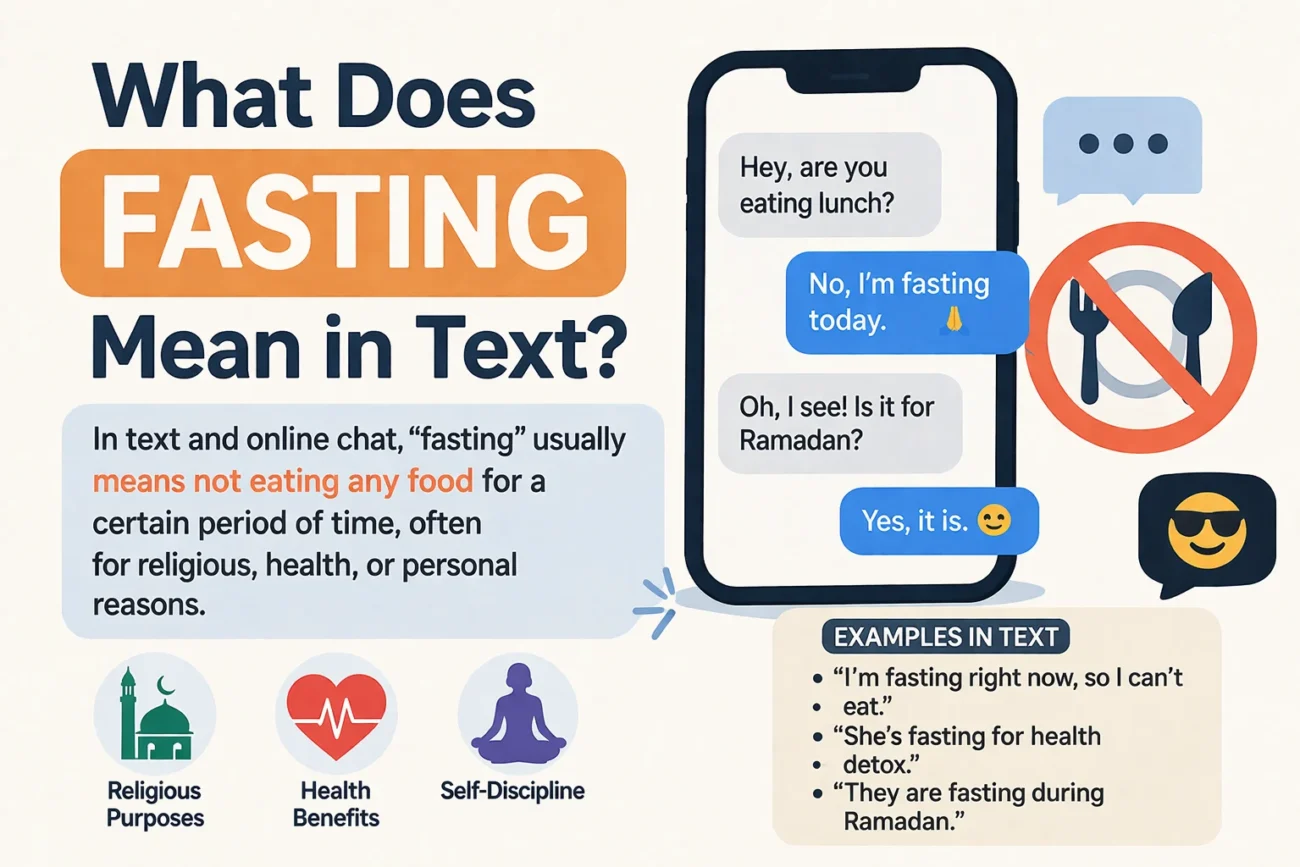
Fasting simply means not eating food (and sometimes not drinking) for a certain period of time. People often see this term in health conversations, religious discussions, TikTok videos, or fitness content. Many search for it to understand diets, religious practices, or lifestyle trends.
You’ll come across this term on platforms like TikTok, Instagram, Snapchat, and even in regular text messages. People use it when talking about health goals, weight loss, or spiritual practices. Some also search it out of curiosity when they see others mentioning it online.
In this article, we’ll break down what fasting really means, how people use it in everyday conversations, and why it’s become such a popular topic online.
what does fasting mean Meaning in Text
Fasting means voluntarily going without food (and sometimes water) for a specific period of time. It is not slang, acronym, or abbreviation. Instead, it is a real word used in both health and religious contexts.
In everyday chat, people usually use “fasting” when talking about:
- Dieting or weight loss
- Religious practices
- Health or medical reasons
- Intermittent fasting routines
For example, someone might say, “I’m fasting today,” which simply means they are not eating for a while.
It’s important to understand that fasting can mean different things depending on the context. In casual conversation, it often refers to diet plans, while in religious settings, it can have deeper spiritual meaning.
Where People Use what does fasting mean
Fasting is commonly discussed across many social platforms. Here’s how people use it in different places:
TikTok
On TikTok, fasting is often mentioned in:
- Weight loss videos
- “What I eat in a day” content
- Intermittent fasting challenges
- Fitness transformation clips
Creators may explain their fasting routine or show results from fasting methods.
Snapchat
On Snapchat, people usually mention fasting in private conversations or stories. For example:
- Sharing that they are fasting today
- Talking about hunger or cravings
- Updating friends about their routine
It’s more casual and personal here.
On Instagram, fasting appears in:
- Fitness posts
- Health influencers’ content
- Story updates
- Reels about diet routines
People often post before-and-after photos or share tips about fasting.
On WhatsApp, fasting is commonly discussed in:
- Personal chats
- Family groups
- Friend conversations
Example:
“I’m fasting today, don’t send food pics 😅”
SMS
In regular text messages (SMS), fasting is used in simple, direct conversations like:
- “I can’t eat right now, I’m fasting.”
- “I’ll join later, I’m fasting until evening.”
It’s used just like any normal word in daily communication.
Real Chat Examples
Here are 10 realistic conversation examples to help you understand how fasting is used:
Example 1
A: Are you coming for lunch?
B: No, I’m fasting today
Example 2
A: Why are you not eating?
B: I’m doing intermittent fasting
Example 3
A: Let’s order pizza!
B: I can’t, I’m fasting right now
Example 4
A: How are you feeling?
B: Hungry 😅 I’m fasting
Example 5
A: Are you skipping meals?
B: Yes, I’m fasting for health reasons
Example 6
A: Wanna grab dinner tonight?
B: I’ll join later, I’m fasting until sunset
Example 7
A: Why are you not eating sweets?
B: I’m fasting this week
Example 8
A: You look different!
B: Thanks, I started fasting
Example 9
A: Can I bring you food?
B: No thanks, I’m fasting
Example 10
A: You’re always online but not eating?
B: Yeah, fasting mode 😄
How to Reply When Someone Says “Fasting”
When someone tells you they are fasting, your response depends on the tone of the conversation.
Funny Replies
- “Strong willpower! I’d fail in 2 minutes 😅”
- “Teach me your power!”
- “Respect! I need snacks every hour 😂”
Casual Replies
- “Okay, take care of yourself.”
- “Alright, let me know when you’re done.”
- “Got it, stay strong!”
Friendly Replies
- “Hope it goes well!”
- “That’s great, good luck!”
- “Stay healthy!”
Neutral Replies
- “Okay.”
- “Understood.”
- “No problem.”
Keep your response respectful, especially if the person is fasting for religious reasons.
Is fasting Rude or Offensive?
No, fasting is not rude or offensive. It is a respectful and commonly used term.
It is generally safe to use in:
- Daily conversations
- School discussions
- Workplace conversations
However, it’s important to be sensitive if someone is fasting for religious reasons. Avoid making jokes that may feel disrespectful or insensitive.
For example, teasing someone about fasting during religious observance may not be appropriate in all settings.
Overall, fasting is a neutral term and widely accepted in both formal and informal situations.
Who Uses This Term?
Fasting is used by a wide range of people:
Age Groups
- Teenagers
- Young adults
- Adults
Gen Z Usage
Gen Z often uses fasting in:
- Fitness trends
- TikTok challenges
- Lifestyle content
- Health routines
Common Platforms
- TikTok
- Snapchat
- YouTube
How Often It Appears Online
Fasting is a popular topic and appears frequently, especially in:
- Health and fitness content
- Religious discussions
- Diet and wellness trends
Origin of the Term
The word “fasting” is not new—it comes from ancient practices.
Historically, fasting has been used in:
- Religious traditions
- Spiritual practices
- Cultural rituals
In modern times, fasting has gained popularity through:
- Health and wellness trends
- Intermittent fasting diets
- Social media influencers
The term itself has always existed, but its popularity has increased due to online fitness and lifestyle content.
Comparison Table
| Term | Meaning | Type | Usage | Popularity |
|---|---|---|---|---|
| fasting | Not eating for a period | Word | Health, religion | High |
| IDK | I don’t know | Acronym | Texting, casual chats | Very High |
| IDC | I don’t care | Acronym | Informal communication | High |
| IMO | In my opinion | Acronym | Opinions online | High |
| BRB | Be right back | Acronym | Chatting, gaming | High |
Real-World Usage Example
Imagine a group of friends planning to go out for dinner. One friend says they are fasting for health reasons. The group respects their decision and adjusts plans accordingly.
For example:
- Friends choose a later time to eat
- They avoid discussing food too much
- They support the person fasting
This shows how fasting is naturally used in everyday life and how people respect it in social situations.
Frequently Asked Questions
What does fasting mean in text messages?
It means not eating (and sometimes not drinking) for a certain period of time.
What does fasting mean on TikTok?
On TikTok, fasting is often shown in diet, fitness, or health-related videos.
Is fasting slang?
No, fasting is not slang. It is a real word used in health and religion.
Is fasting rude or offensive?
No, it is a neutral and respectful term. Just be mindful of context.
How should you reply to fasting?
You can respond with simple, supportive messages like “Good luck” or “Stay healthy.”
Conclusion
Fasting means voluntarily not eating food for a certain time, often for health, fitness, or religious reasons. It is a common and widely understood term used across social media and everyday conversations.
People use it on platforms like TikTok, Snapchat, Instagram, WhatsApp, and in texting when discussing lifestyle choices or personal routines.
It is not rude or slang, and it is generally safe to use. However, it’s important to respect the context, especially when someone is fasting for religious purposes.
discover more post
Sample Messages Asking for Financial Help
89+ Angry Messages to Let Someone Know How You Feel …
Absolute Deviation Mean Hidden Truths Behind Data …
