If you’ve ever been scrolling through social media or chatting with someone about music, you might have seen the term “EP” and wondered what it actually means. Is it an album? A playlist? Or something else entirely?
Don’t worry — you’re not alone. A lot of beginners get confused by this term, especially because it shows up in different places like Spotify, YouTube, Instagram captions, and even text messages.
In this guide, I’ll break it down in the simplest way possible. By the end, you’ll fully understand what “EP” means in music, how people use it in texts, and why it’s so popular in 2026.
What Does EP Mean in Music?
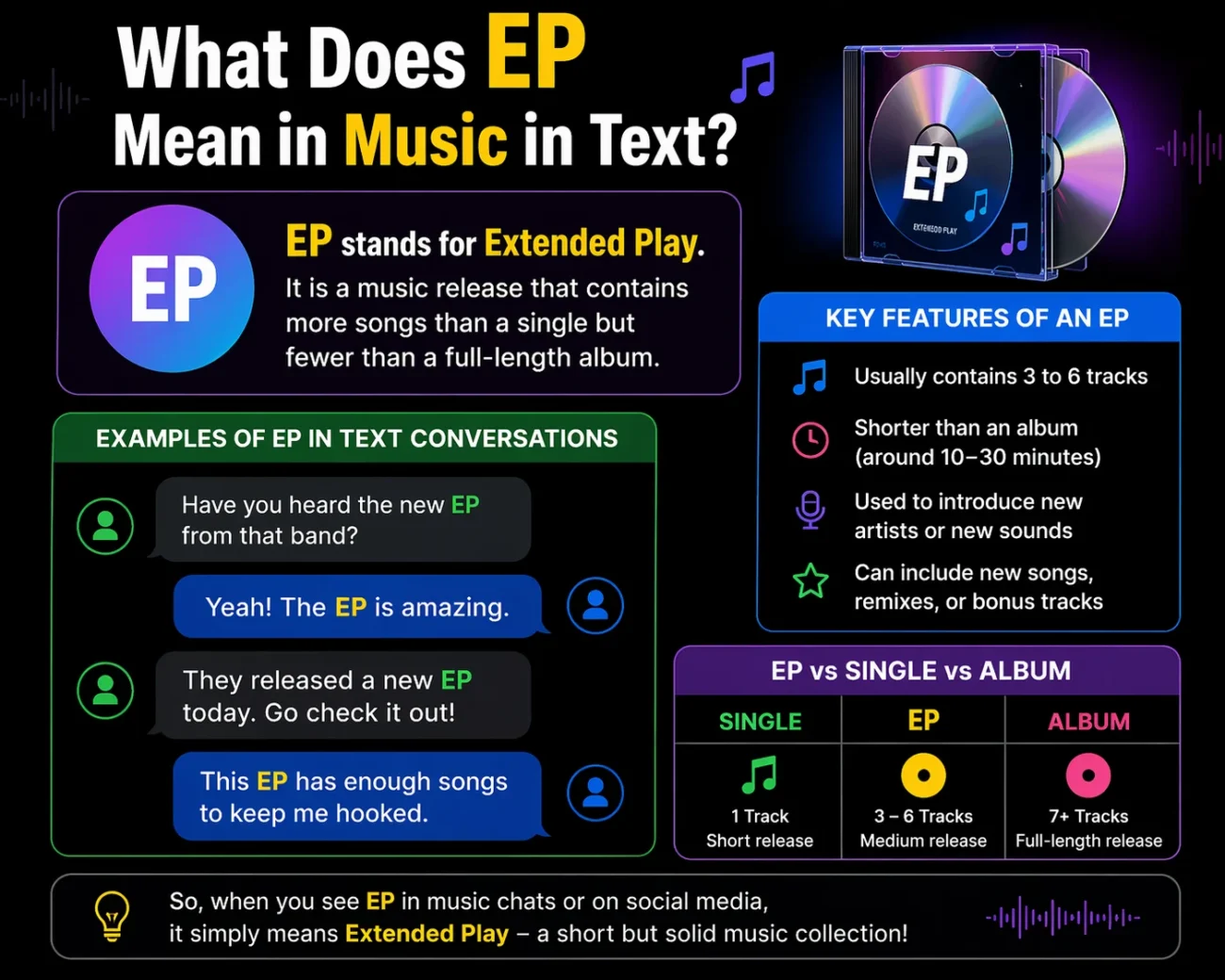
In music, EP stands for “Extended Play.”
It refers to a music release that is longer than a single but shorter than a full album.
That’s it — simple.
Think of it like a middle option:
- Single → 1 song
- EP → Usually 3 to 6 songs
- Album (LP) → 8 to 15+ songs
So when someone says, “I just dropped my EP,” they mean they released a small collection of songs — not just one, but not a full album either.
Why Is It Called “Extended Play”?
The term comes from older music formats like vinyl records.
Back in the day:
- A single had 1 or 2 songs
- An EP (Extended Play) had a few more songs
- An LP (Long Play) was a full album
Even though technology has changed, the name stuck. Today, we still use “EP” in the same way — just on digital platforms instead of vinyl.
What Does EP Mean in Text or Chat?
When people use “EP” in text messages or online conversations, they usually mean the same thing: a short music project.
Simple meaning in text:
EP = A small collection of songs released by an artist
Examples of EP in Text Messages
Here are some real-life style examples so you can understand how people use it:
- “Did you hear his new EP? It’s fire 🔥”
- “She’s dropping an EP next week!”
- “This EP only has 5 tracks but all are amazing.”
- “I’m working on my first EP right now.”
- “That EP hit different 😮💨”
In all these cases, “EP” refers to a music release — not anything else.
EP vs Album: What’s the Difference?
This is where many people get confused, so let’s make it very clear.
EP:
- 3–6 songs
- Short listening time (10–25 minutes)
- Often used by new or independent artists
- More focused and experimental
Album:
- 8+ songs
- Longer (30–60+ minutes)
- Bigger production
- Usually more official or major release
Simple way to remember:
👉 EP = Short project
👉 Album = Full project
Why Artists Release EPs
You might wonder — why not just release an album every time?
There are actually several smart reasons artists choose EPs.
1. Testing New Music
Artists use EPs to try new styles without committing to a full album.
2. Building Hype
EPs keep fans engaged between albums.
3. Faster Release
Albums take time. EPs are quicker to produce and release.
4. Budget-Friendly
Especially for new artists, EPs cost less to make.
5. Storytelling in Small Form
Some artists prefer shorter, more focused projects.
EP Meaning on Social Media (2026 Trends)
In 2026, “EP” is everywhere online. You’ll see it on:
- Instagram captions
- TikTok videos
- YouTube music uploads
- Spotify playlists
- Twitter/X posts
Common social media uses:
- “My debut EP is out now 🎶”
- “Link in bio for the EP!”
- “Streaming my EP all night 💿”
- “Visuals for my EP dropping soon”
It’s become part of everyday music language online.
EP in Different Contexts
While “EP” usually means Extended Play in music, context still matters.
1. Music Context (Most Common)
EP = Extended Play (music project)
2. Gaming or Tech (Less Common)
Sometimes EP can mean:
- Experience Points (in games)
But in music chats, it almost always means Extended Play.
How Long Is an EP?
There’s no strict rule, but generally:
- 3 to 6 songs
- Around 10 to 25 minutes total
Some platforms like Spotify even classify releases based on length and number of tracks.
Real-Life Example (Simple Explanation)
Let’s say an artist releases:
- 1 song → Single
- 4 songs → EP
- 12 songs → Album
So if your friend texts:
👉 “His new EP has 4 tracks.”
Now you instantly know what they mean.
Why EPs Are Popular in 2026
EPs are more popular than ever right now — and there’s a reason for that.
Short Attention Spans
People prefer quick, digestible content.
Streaming Culture
Listeners don’t always want long albums.
Content Strategy
Artists release music more frequently using EPs.
TikTok & Viral Trends
Shorter projects help songs go viral faster.
EP vs Mixtape (Bonus Difference)
Another confusing term is mixtape.
Here’s a quick comparison:
EP:
- Official release
- Polished production
- Available on platforms
Mixtape:
- More casual
- Sometimes free
- Experimental or raw
When Should You Use “EP” in Text?
Use “EP” when you are talking about:
- A short music project
- New releases
- Artists and songs
- Streaming or playlists
Example:
✔ “Check out this EP”
✔ “I love this EP”
Avoid using it if the conversation is not about music.
Quick Summary
Let’s keep it super simple:
- EP = Extended Play
- A short music project
- Usually 3–6 songs
- Longer than a single, shorter than an album
- Common in texts and social media
Final Thoughts
Now you know exactly what “EP” means in music and in text conversations.
It’s one of those simple terms that can feel confusing at first — but once you understand it, you’ll start noticing it everywhere.
Whether someone is talking about a new release, promoting their songs, or just sharing music they love, “EP” is a key part of modern music language.
So next time you see:
👉 “New EP out now!”
You’ll know exactly what they mean — no confusion at all.
descover more post
What Does PDA Mean Secrets Behind Public Displays of …
What Does YH Mean The Truth Behind This Common Text …
119+ Heartfelt Short Thinking of You Messages (2026 Guide)
