If you’ve ever watched Korean dramas, listened to K-pop, or chatted with someone online, you’ve probably seen the word “oppa” pop up. At first glance, it might seem like just another internet slang term. But in reality, it carries a deeper cultural meaning that goes far beyond texting.
So what does “oppa” really mean in text? And how are people using it in 2026 across social media, chats, and everyday conversations?
Let’s break it down in simple, clear language.
What Does “Oppa” Mean?
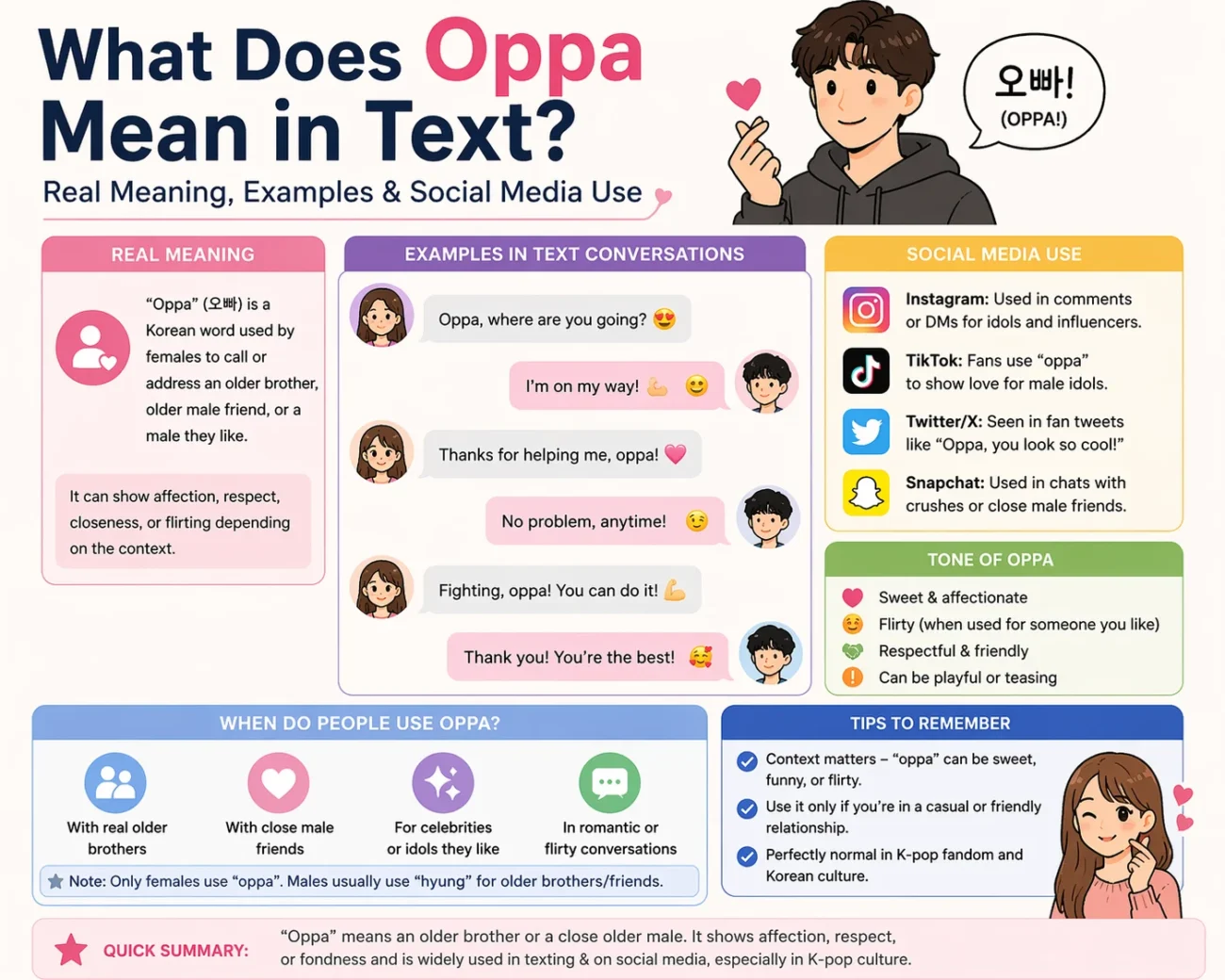
In Korean, “oppa” (오빠) is a word used by females to refer to an older male.
It can mean:
- Older brother (biological)
- Older male friend
- Boyfriend
- Someone you admire or feel close to
In texting and online use, the meaning depends on the situation. It’s not just about age—it’s about relationship, tone, and emotion.
Simple Meaning in Text
In modern texting, “oppa” usually means:
👉 A girl calling a guy she likes, trusts, or feels close to
It often carries a cute, respectful, or slightly flirty tone.
Why “Oppa” Became Popular Online
The rise of Korean entertainment changed everything.
With the global popularity of:
- K-dramas
- K-pop
- Korean influencers
People around the world started picking up Korean words—and “oppa” became one of the most used.
In dramas, you’ll often hear female characters say “oppa” to:
- Their boyfriend
- A crush
- A protective older male
Fans quickly adopted it in real life and online chats.
Different Meanings Based on Context
This is where things get interesting. “Oppa” doesn’t have just one fixed meaning.
1. Literal Meaning (Family)
A girl calling her real older brother:
“Oppa, can you help me?”
This is the original, traditional use.
2. Friendly Use
Used for an older male friend:
“Thanks, oppa!”
Here, it shows comfort and closeness.
3. Romantic / Flirty Use
This is the most common online meaning today.
“Good night, oppa ❤️”
In this case, it suggests affection or attraction.
4. Fan Culture Use
Fans use “oppa” for male celebrities:
“He’s my favorite oppa!”
This doesn’t mean a real relationship—it shows admiration.
What “Oppa” Does NOT Mean
A lot of beginners misunderstand this word.
Let’s clear it up:
- It does NOT mean “boyfriend” exactly
- It does NOT mean “any guy”
- It is NOT used by males (normally)
Only females use “oppa” when speaking to or about older males.
Examples of “Oppa” in Text
Here are some real-style examples you might see in chats:
Casual Chat
- “Oppa, where are you?”
- “I miss you, oppa 🥺”
Friendly Tone
- “Thanks for helping me, oppa!”
Romantic Use
- “Oppa, you always make me smile ❤️”
- “Let’s go out tomorrow, oppa!”
Fan / Social Media
- “My oppa is so handsome 😍”
- “He’s the best oppa ever!”
How It’s Used on Social Media (2026)
In 2026, “oppa” is widely used across platforms like:
- Instagram comments
- TikTok captions
- WhatsApp chats
- YouTube fan communities
Common Trends
- K-pop Fans
- “Oppa notice me!”
- “Love you oppa 💜”
- Couple Content
- Girls calling their boyfriend “oppa” even if he’s not Korean
- Memes
- Funny posts exaggerating “oppa” culture
- Aesthetic Posts
- “Soft life with my oppa ✨”
Is It Okay for Non-Koreans to Use “Oppa”?
Short answer: Yes, but carefully.
It’s widely used globally now, but you should understand the tone.
Good Use
- Casual chats with friends who understand the meaning
- Fan culture (K-pop, dramas)
Be Careful
- Don’t use it randomly with strangers
- Avoid using it in formal situations
- Don’t force it if it feels unnatural
Difference Between “Oppa” and Similar Words
Korean has other terms too, and mixing them up is common.
Oppa
- Used by females
- For older males
Hyung
- Used by males
- For older males
Unni
- Used by females
- For older females
Noona
- Used by males
- For older females
So if a guy says “oppa,” it sounds incorrect in Korean culture.
Emotional Meaning Behind “Oppa”
This word isn’t just a label—it carries feeling.
When someone says “oppa,” it can express:
- Trust
- Respect
- Affection
- Playfulness
- Admiration
That’s why it feels more personal than just saying “hey” or using a name.
How Tone Changes the Meaning
Tone matters a lot.
Cute Tone
“Oppaaa 🥺💕”
Feels playful and soft
Normal Tone
“Oppa, listen.”
Neutral and conversational
Flirty Tone
“Come here, oppa 😘”
Romantic and teasing
Same word, completely different vibe.
Common Mistakes People Make
Let’s avoid some awkward moments.
1. Using It Without Context
Calling someone “oppa” without a relationship can feel strange.
2. Overusing It
Saying it in every sentence can sound unnatural.
3. Wrong Gender Usage
Men using “oppa” is not correct in Korean culture.
4. Thinking It Means Only “Boyfriend”
It can mean that—but not always.
Why People Love Using “Oppa”
There’s a reason this word went viral.
- It sounds cute
- It feels emotional
- It adds personality to messages
- It connects fans to Korean culture
It’s more expressive than many English words.
Oppa in Relationships
In romantic relationships, “oppa” can feel special.
Some girls use it to:
- Show closeness
- Be playful
- Express affection
Example:
“Oppa, don’t forget our date tonight ❤️”
Even outside Korea, couples now use it for fun or style.
Oppa vs Babe vs Bro
Let’s compare quickly.
Oppa
- Emotional, respectful, slightly cute
- Used by females
Babe
- Romantic
- Gender-neutral
Bro
- Friendly
- Casual, not romantic
So “oppa” sits somewhere between respect + affection + cuteness.
Should You Start Using “Oppa”?
It depends on your style.
Use It If:
- You enjoy Korean culture
- You understand the meaning
- It feels natural to you
Avoid It If:
- You’re unsure about the context
- You’re in formal communication
- It feels forced
Quick Summary
Here’s the simple takeaway:
- “Oppa” means an older male (used by females)
- It can mean brother, friend, or boyfriend
- In text, it often shows affection or closeness
- It’s popular due to K-dramas and K-pop
- Context and tone change the meaning
Final Thoughts
“Oppa” is more than just a trendy word—it’s a small piece of Korean culture that made its way into global conversations.
When used correctly, it can make your messages feel warmer, more personal, and even a little playful. But like any slang, understanding the context is key.
So next time you see someone type “oppa,” you’ll know exactly what they mean—and maybe even how they feel.
descover more post
30+ Valentine Quotes for Elderly to Impress Them 💝
70+ Anniversary Wishes for Son and Daughter-in-Law 2026
